

Michelin‑Star Cuisine: Beyond the Plate
An editorial exploration of precision, artistry, and the modern culinary mind.
Michelin‑star cuisine is not simply about exceptional food. It is a discipline, a philosophy, and a form of expression where technique, emotion, and identity converge on a single plate. To understand it, you must step behind the pass—into the choreography, the tension, and the quiet brilliance that defines a world built on excellence.
Michelin cuisine is not only about advanced technique and expensive ingredients. It is a way of telling stories through taste, texture, and aesthetics. In Michelin-starred restaurants, every plate is the result of thousands of repetitions, a rigorous selection of products, and a delicate balance between creativity and discipline.
What Exactly Is a Michelin Star?
The Michelin star is one of the most prestigious distinctions in global gastronomy, awarded to restaurants that achieve an exceptional level of culinary excellence. It is not given to the chef, but to the restaurant—though the chef’s identity inevitably becomes intertwined with the star.
The Meaning of a Michelin Star
A Michelin star is not a trophy. It is a promise.
One Star — A restaurant worth a deliberate stop; refined, focused, technically sound.
Two Stars — A destination worth a detour; cuisine with depth, clarity, and unmistakable identity.
Three Stars — A journey in itself; a culinary experience so exceptional that it defines a place and a moment in time.
Behind each star lies consistency, mastery, and an unwavering commitment to craft.
A Philosophy of Precision and Emotion
In a Michelin‑level kitchen, every gesture has purpose. Every ingredient is chosen with intention. Every plate tells a story. This is cuisine where:
technique becomes language,
ingredients become characters,
and the plate becomes a stage.
The goal is not to impress—it is to move. To create a moment that stays with the guest long after the last bite.
The Origins of the Michelin Guide
The story is almost unbelievable: it all begins not with chefs or restaurants, but with… tires.
1900, France. Brothers André and Édouard Michelin publish a small red handbook for motorists—a practical guide filled with maps, fuel stations, mechanics, and places to eat along the road. Its purpose was simple and brilliant: encourage people to travel more, drive more, and naturally… wear out more tires.
1926. The first stars appear, awarded to restaurants that demonstrated exceptional culinary craftsmanship.
1931. The now‑iconic system of one, two, and three stars is introduced—exactly as we know it today.
What began as a technical travel guide gradually transformed into the world’s most influential authority on culinary excellence. Over time, the Michelin Guide evolved from a roadside companion into the ultimate barometer of gastronomic prestige.
The Anatomy of a Michelin Kitchen
A Michelin kitchen is a living organism—precise, disciplined, and relentlessly focused. Its structure is built on the classic brigade system, but elevated to modern standards:
The Executive Chef — Visionary, architect, storyteller.
The Sous‑Chef — The engine of the kitchen, guardian of consistency.
Chefs de Partie — Specialists who command their stations with surgical precision.
Commis & Stagiaires — The future of the craft, learning through repetition, rigor, and respect.
Here, mise en place is sacred. It is the foundation of every service, the quiet ritual that transforms chaos into control.
Technique as Identity
Modern Michelin cuisine is defined by a balance between tradition and innovation. Classic techniques—sous‑vide, confit, reduction, fermentation—coexist with modernist methods such as:
controlled gelification,
spherification,
precision temperature cooking,
emulsions with ultra‑fine textures,
and plating guided by visual storytelling.
The goal is not to be experimental for the sake of novelty, but to use technique as a tool for clarity. A great dish is not complex—it is inevitable.
The Plate as a Visual Language
In the modern era, plating is no longer decoration; it is composition.
A Michelin plate follows the same principles as a photograph:
Focus — The hero ingredient is unmistakable.
Balance — Textures, colors, and shapes guide the eye.
Negative Space — Silence on the plate creates tension and elegance.
Light & Shadow — Glossy reductions, matte purées, crisp elements—each texture catches light differently.
The result is a plate that feels alive, cinematic, and intentional.
The Experience: A Choreographed Journey
A Michelin meal is not a sequence of dishes—it is a narrative arc.
Amuse‑bouche sets the tone.
Entrées introduce the chef’s voice.
Main courses deliver depth, contrast, and emotion.
Desserts close the story with clarity and finesse.
Every course is calibrated: temperature, acidity, texture, aroma, timing. The guest should feel guided, never overwhelmed.
Beyond Perfection: The Human Side of Michelin
Behind the elegance lies intensity:
long hours,
relentless repetition,
pressure to maintain or elevate the star,
and the emotional weight of expectation.
Yet, for those who choose this path, the reward is profound: the ability to create moments that people remember for a lifetime.
Michelin‑star cuisine is not defined by luxury ingredients or elaborate techniques. It is defined by intention.
It is the pursuit of purity, balance, and emotion. It is the belief that food can be art, craft, and storytelling in the same breath. It is the quiet understanding that excellence is not an act—it is a habit.
Examples of Michelin-Style Dishes
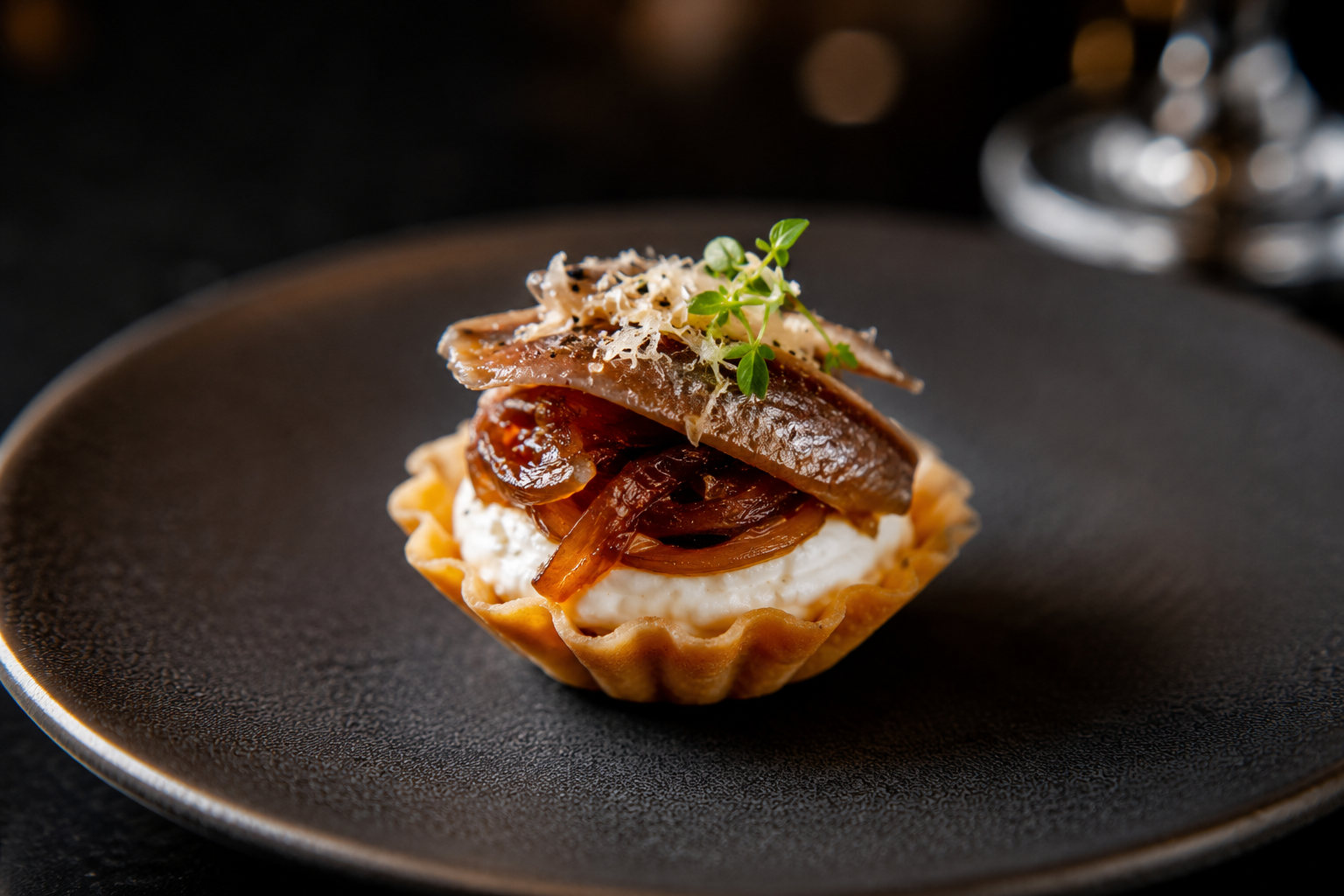
Amuse-bouche:
A delicate mini tart filled with slowly caramelized onions, layered over a silky Parmesan cream and finished with a finely aged anchovy fillet. The sweetness of the onion balances the deep salinity of the anchovy, while the rich Parmesan adds a velvety, savory depth. Served in a crisp buttery shell and finished with micro herbs for freshness, the dish delivers an intense explosion of umami in a single refined bite.
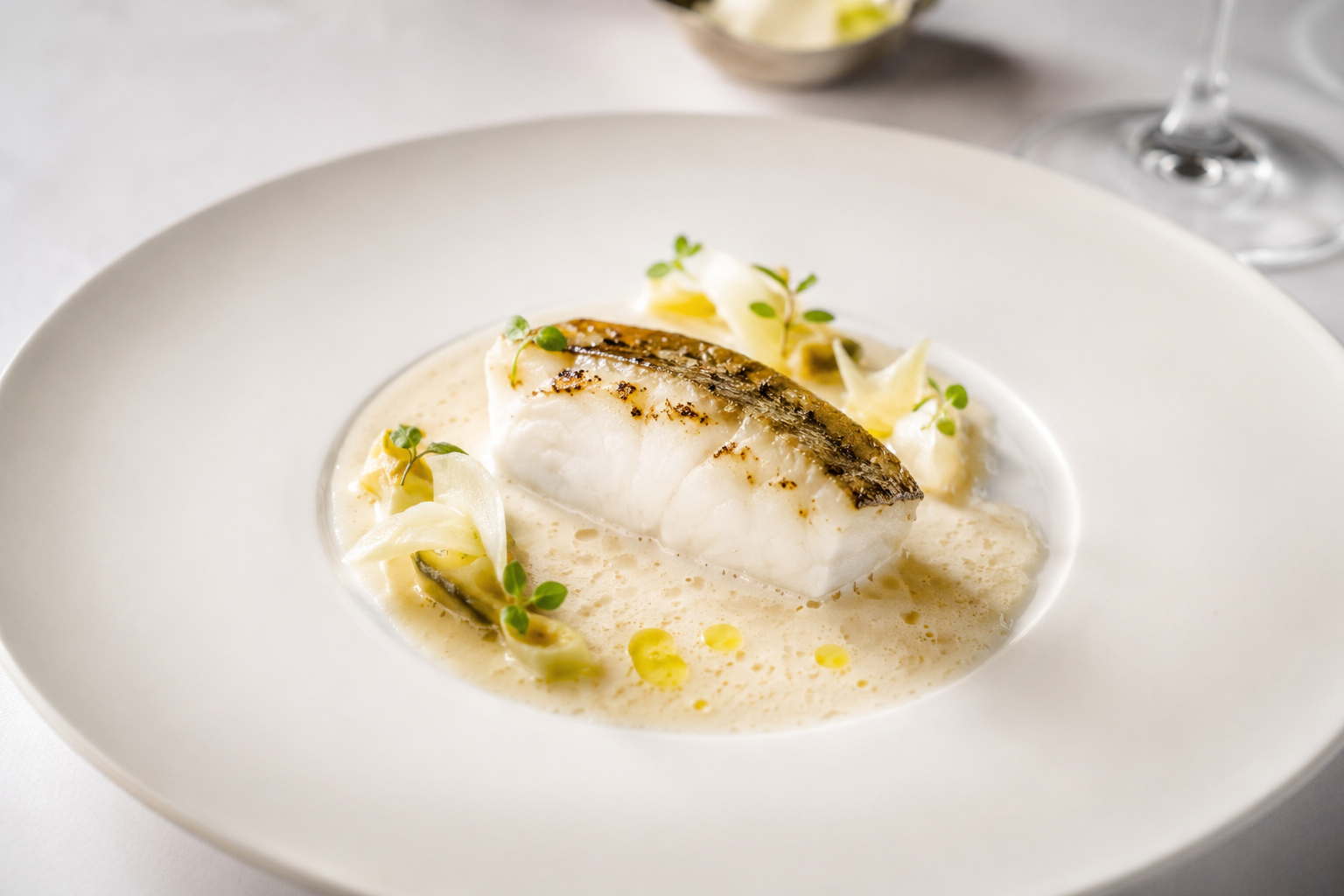
Turbot Fillet with Champagne Sauce and Confit Celery
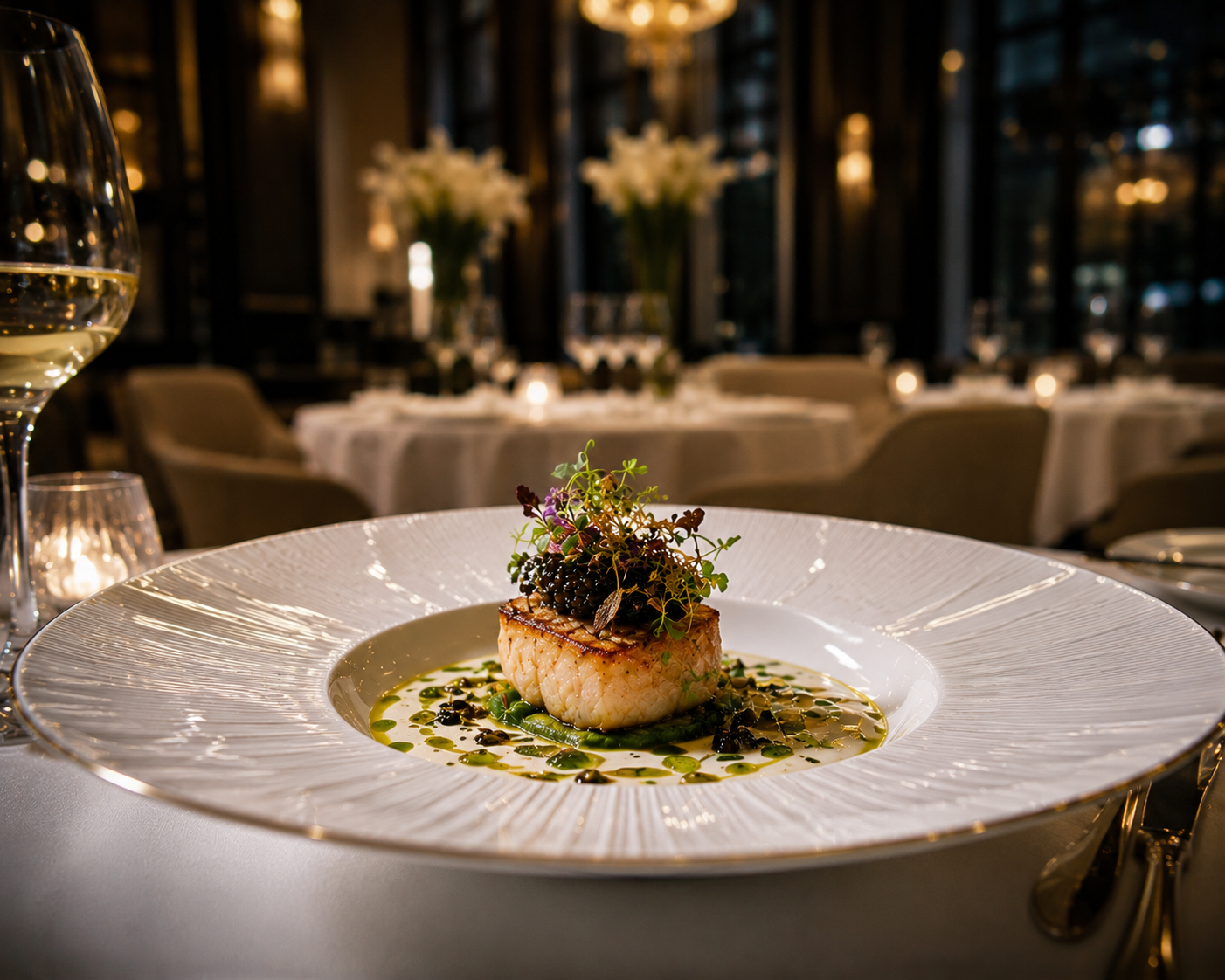
The fish is cooked at 47°C sous-vide to maintain soft, elastic fibers. The sauce is mounted in a bain-marie with cold butter to achieve a subtle sheen. On the plate, it resembles a minimalist painting: whites, pearlescent tones, and golden reflections.
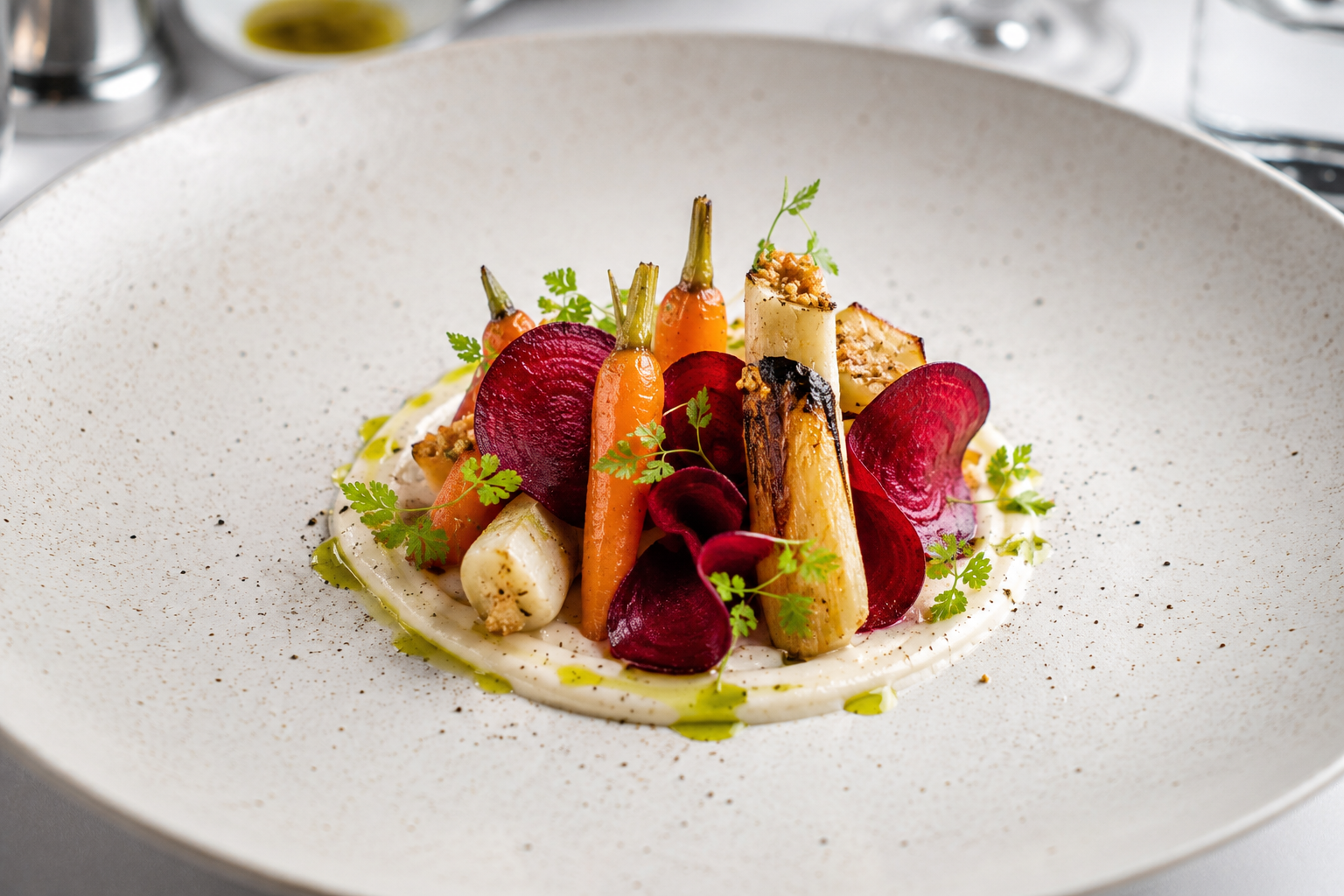
Root Vegetables in Textures – a Vegetable “Signature Dish”
Glazed carrots, salt-baked parsnip, raw beetroot sliced into thin petals, and smoked celery cream. It highlights the power of simple ingredients and their transformation through multiple techniques.
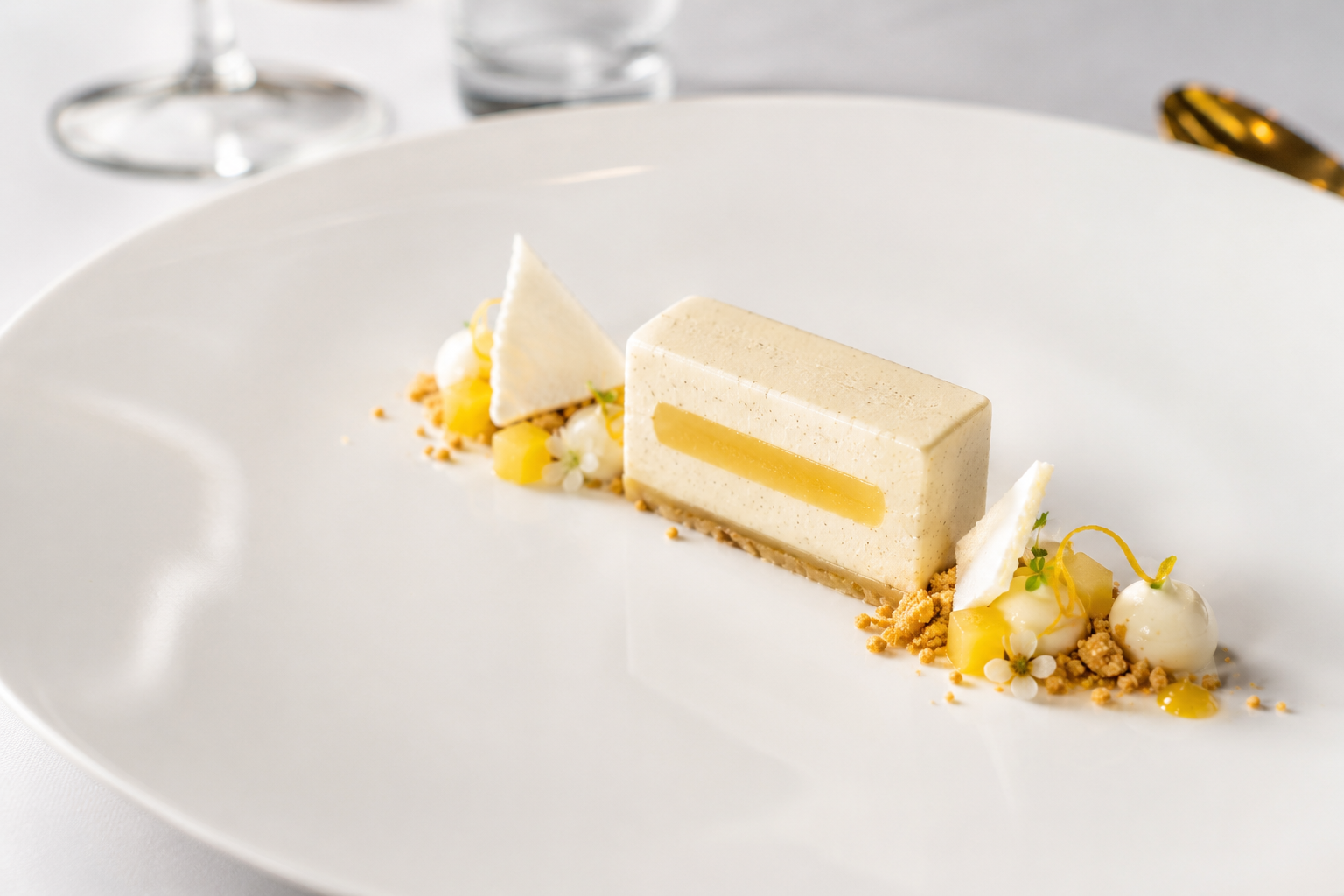
Dessert: Tahitian Vanilla Parfait with Yuzu Insert and Almond Crumble
The combination of floral vanilla and citrus acidity is a mark of refinement. The plating is geometric and clean, with notes of yellow and white.
The Essence
What Defines a Michelin Plate
1. The Perfect Ingredient
Michelin restaurants seek seasonal ingredients, rarely sourced from supermarkets. For example:
young carrots from the restaurant’s garden, harvested two hours before service;
a blue lobster from Brittany, chosen for the sweetness of its meat and its distinctive salinity;
hand-picked maitake mushrooms, valued for their deep umami.
The true value lies in the purity of flavor, not in extravagance.
3. Balance
A Michelin plate is never heavy or overloaded. Everything is carefully calculated:
acidity for freshness,
umami for depth,
bitterness for structure,
sweetness for roundness,
crunch for dynamism.
2. Impeccable Technique
The final plate is the result of techniques that require years of training:
sous-vide for perfect temperature control;
confit for rich textures;
fermentation for acidic complexity;
glazing for shine and depth of flavor;
precise sauce tempering to ensure stability and a silky texture.
4. The Story
Every plate expresses something about the chef, the region, or the season. For example:
“Forest After Rain” – a composition of mushrooms, fried leaves, and cold smoke from pine needles;
“The Sea in Winter” – raw shellfish, fermented citrus, and seaweed-infused ice.