

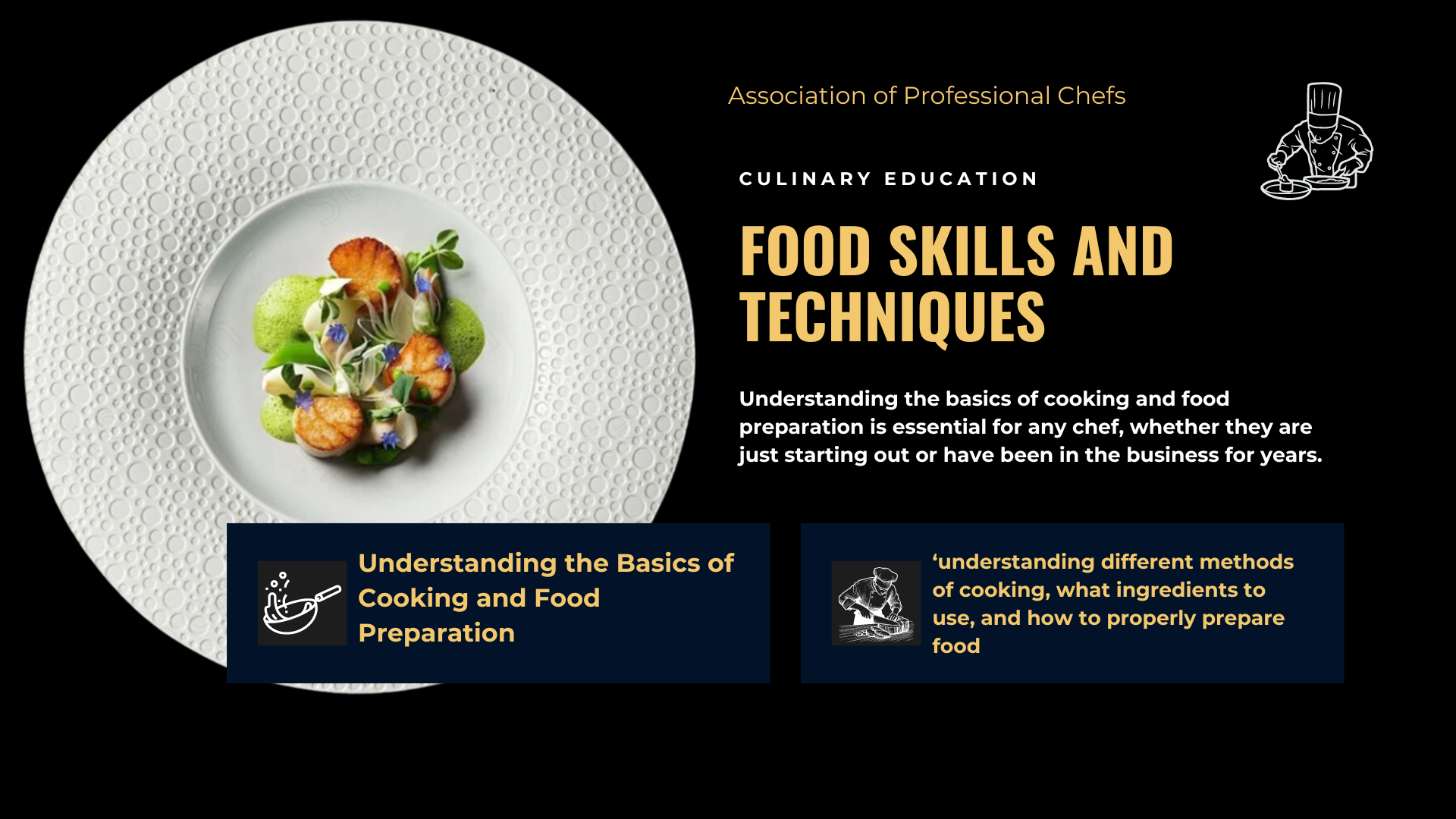
Understanding the basics of cooking and food preparation is essential for any chef, whether they are just starting out or have been in the business for years. There are a few key things to keep in mind when it comes to cooking, such as understanding different methods of cooking, what ingredients to use, and how to properly prepare food
Cooking veal or beef in the modern French style blends tradition with contemporary techniques, often focusing on fresh ingredients, precise cooking methods, and elegant presentation. Let's break down a few key methods used in French cuisine today to prepare veal and beef, with examples of modern dishes you might find in a contemporary French kitchen.
Sous-vide Cooking (for tenderness and precision)
Sous-vide has become a popular technique in modern French cuisine because it allows precise temperature control. The meat is vacuum-sealed in a bag and slowly cooked in a water bath at a consistent low temperature. This method helps maintain the moisture and texture of delicate cuts like veal or more robust cuts of beef.

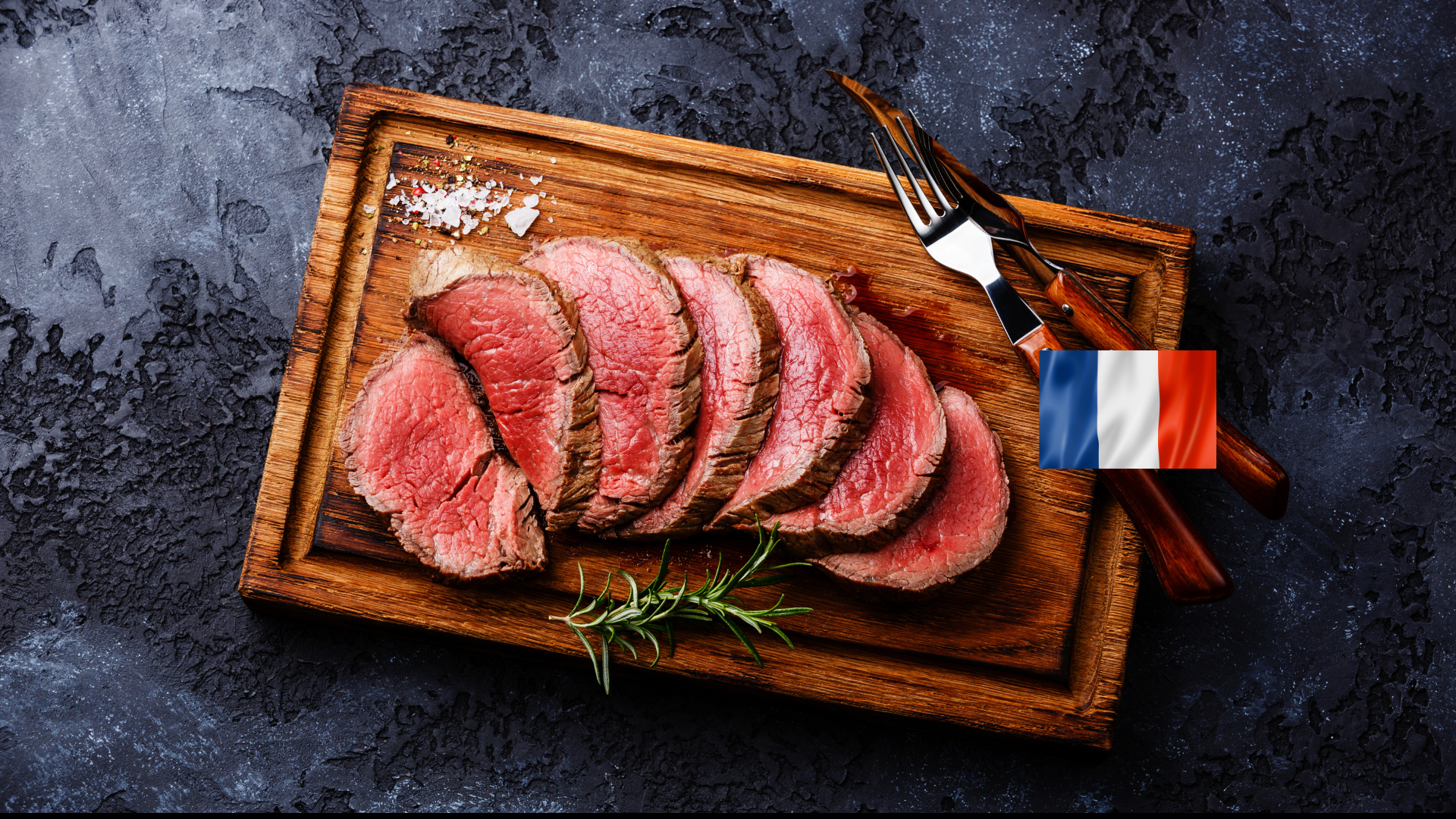
Modern French Veal: A dish like Veal Medallions Sous-Vide could be paired with a light, creamy Mushroom Velouté, and garnished with seasonal vegetables.
Modern French Beef: Beef Tenderloin Sous-Vide, cooked to a perfect medium-rare, might be served with a red wine reduction and Pommes Purée (potato purée). The sous-vide method ensures that the beef is evenly cooked throughout, with a tender and juicy texture.
Pan-searing and Finishing in the Oven (for crust and tenderness)
A traditional French cooking technique with modern refinement. First, the veal or beef is seared in a hot pan to create a flavorful crust, then finished in the oven to gently cook the interior. The balance of caramelization and tenderness makes this a favorite method.
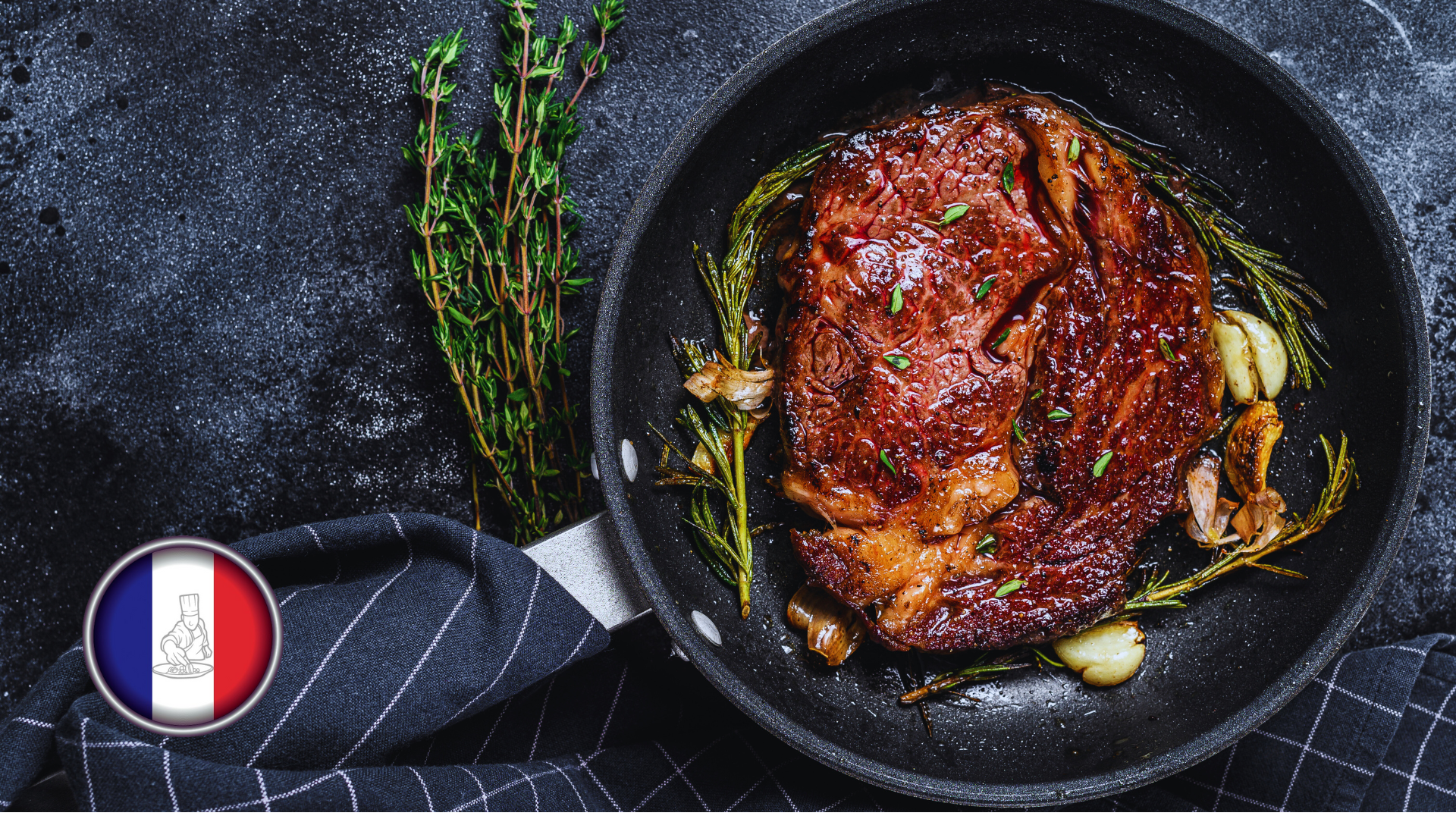
Modern French Veal: Veal Chop with Herb Butter – Pan-seared with fresh herbs and garlic, then finished in the oven. Served with roasted root vegetables or Purée de Céleri-rave (celery root purée).
Modern French Beef: Entrecôte with Bordelaise Sauce – Ribeye steak, seared and finished in the oven, served with a rich Bordelaise sauce made from red wine, bone marrow, shallots, and demi-glace.
Slow Braising (for rich, deep flavors)
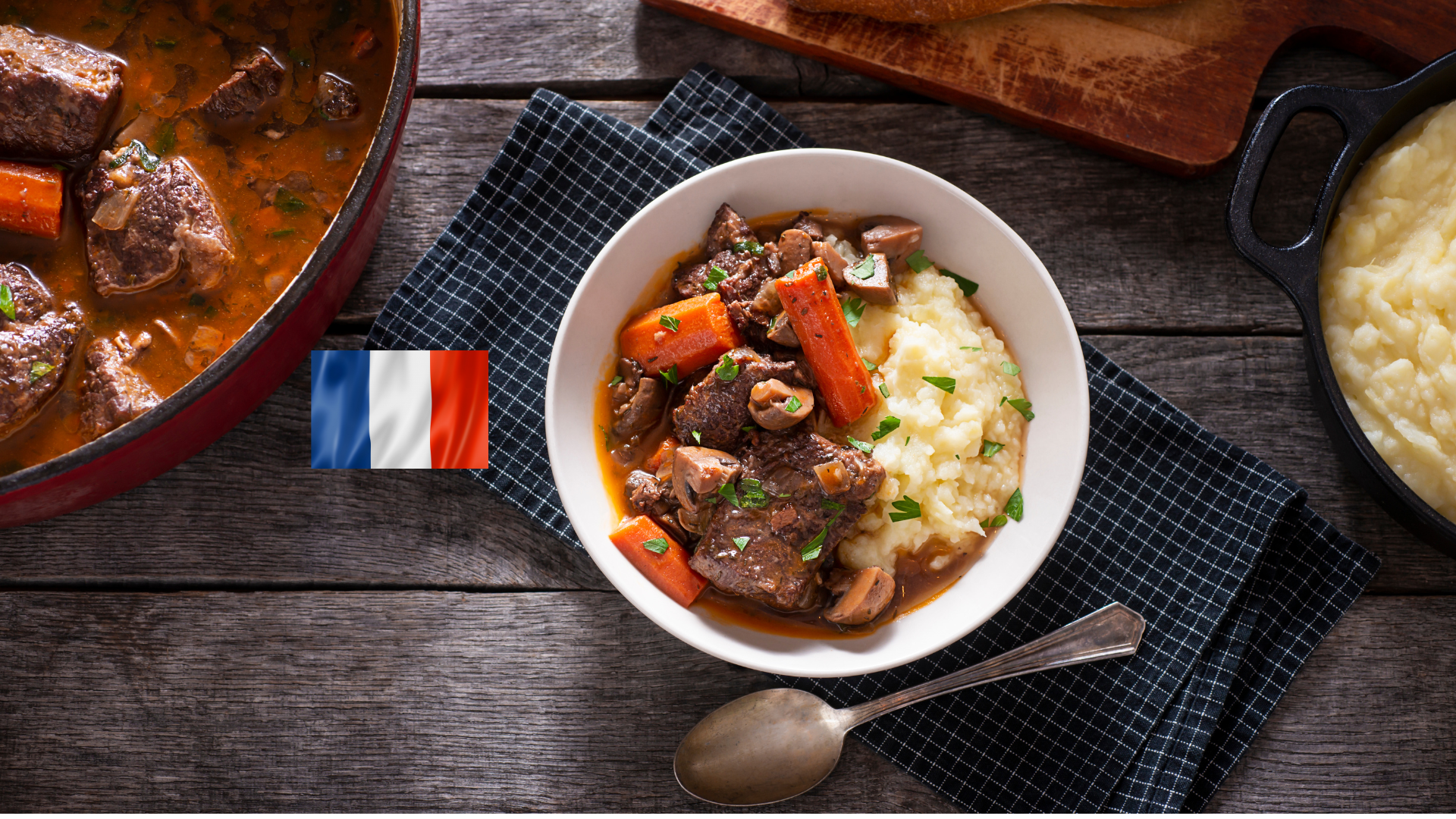
Braising is a hallmark of French cuisine, but modern chefs use lighter broths, aromatic herbs, and refined presentation.
Modern French Veal: Blanquette de Veau – A classic French veal stew in a light cream sauce, served with carrots and pearl onions. The modern twist might involve sous-vide braising or lighter creams and garnishes like microgreens.
Modern French Beef: Boeuf Bourguignon – A modern interpretation could involve braising short ribs instead of chuck, using a delicate red wine reduction, and serving it with smaller, more refined vegetables.
Minimalist Sauces and Juices (light, concentrated flavors)
The trend in French cuisine is to avoid overly rich, heavy sauces and instead focus on reductions and jus that enhance the natural flavors of the meat.
Veal Jus: For modern veal dishes, veal is often served with a light veal jus reduction made from roasted veal bones, vegetables, and herbs.
Beef Jus: Beef Fillet with Shallot Jus – A tender cut of beef can be served with a concentrated jus made by reducing beef stock with shallots and thyme, finished with a touch of butter.
5. Grilling with Herb Marinades (for a light, charred finish)
Grilling, often accompanied by marinades made from fresh herbs, olive oil, and citrus, is another modern French cooking method.
Modern French Veal: Grilled Veal with Lemon and Thyme Marinade – Marinated in lemon zest, thyme, and olive oil, then lightly grilled to maintain the tenderness of the veal. This could be served with a bright salad of fennel and arugula.
Modern French Beef: Côte de Bœuf – A large bone-in ribeye, grilled and served family-style. A contemporary twist could be adding charred vegetables like baby leeks or spring onions for freshness and texture.
6. Plating and Presentation (focus on aesthetics)
In modern French cuisine, plating and presentation are as important as the cooking technique itself. Clean lines, vibrant colors, and careful composition are key.
Modern Veal Dish: Veal Tenderloin with Carrot Purée and Glazed Baby Carrots, arranged artistically on the plate, garnished with fresh herbs and edible flowers.
Modern Beef Dish: Filet Mignon with Truffle Mashed Potatoes, artfully presented with a drizzle of jus and a delicate garnish of microgreens.
7. Pairing with Light, Seasonal Vegetables
Modern French cuisine focuses on seasonality and freshness. Veal and beef dishes are often paired with vegetables that are in season, prepared with techniques like roasting, grilling, or puréeing.
Veal Example: Veal with Spring Vegetables – Veal fillet served with peas, asparagus, and morels, with a light veal jus or a lemon beurre blanc.
Beef Example: Beef with Autumn Vegetables – A rich beef dish with roasted squash, chestnuts, and parsnips, accompanied by a red wine reduction.
Conclusion
Modern French cooking keeps classic techniques alive while refining the ingredients, presentation, and lightness of dishes. Whether it’s sous-vide, braising, or simply grilling, veal and beef are treated with great respect, with an emphasis on showcasing the meat's natural flavor.